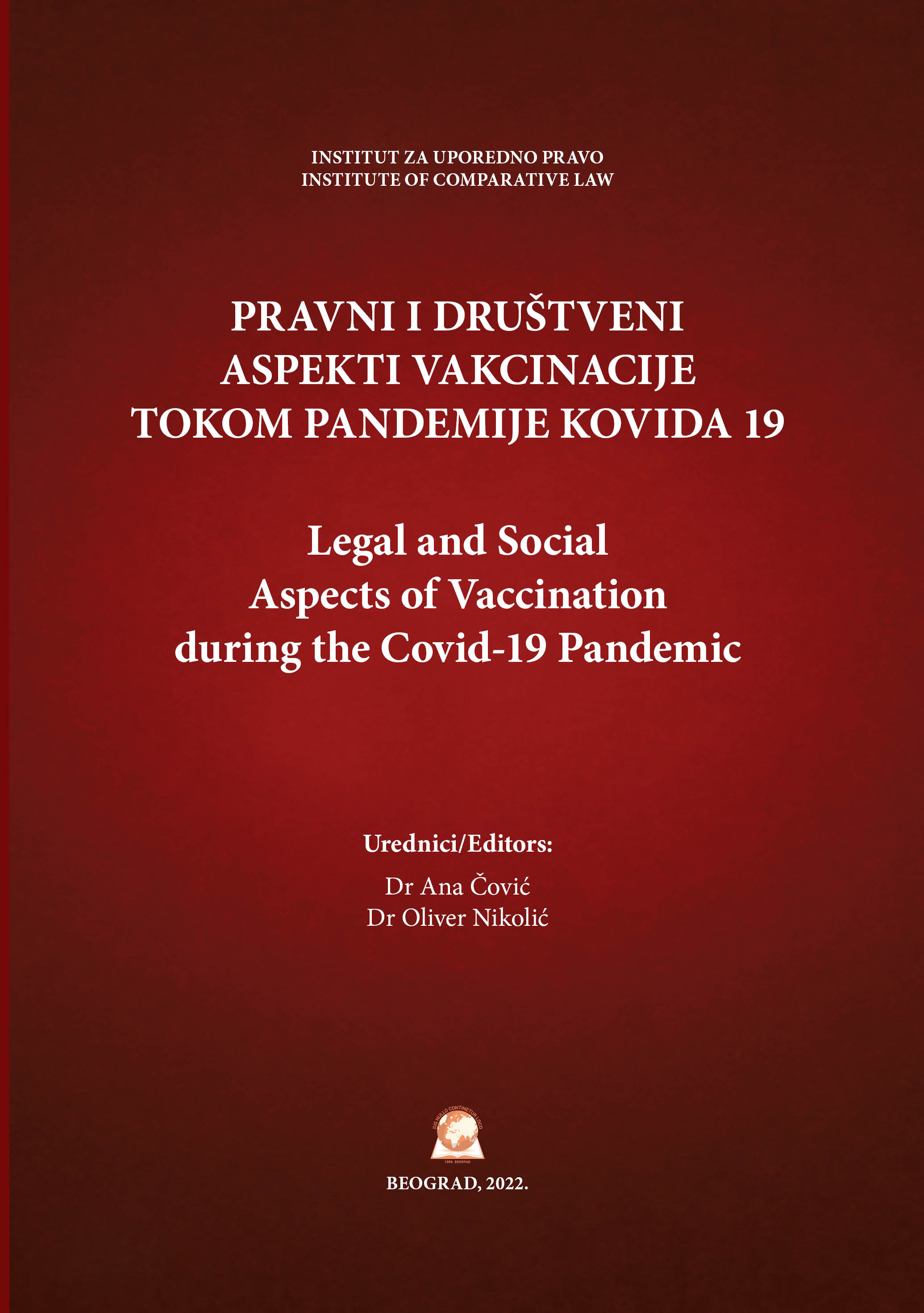
SOCIALLY INAPPROPRIATE BEHAVIOR OF ADOLESCENTS DURING THE COVID-19 PANDEMIC WITH AN OVERVIEW TO VACCINATION IN BOSNIA AND HERZEGOVINA
Article Sidebar
Main Article Content
Abstract
During the corona virus pandemic, the lives of citizens and their activities took place in complex conditions, and due to the state of emergency, children and adolescents found it difficult to endure social isolation. In such circumstances, where movement is restricted due to curfew, young people were forced to spend most of their time at home, isolated and deprived of their usual daily activities and contacts. In such circumstances, where they are limited with movement and communication only with close family members, certain frustrations often occur, which are the result of loneliness and isolation. Of course, all this leaves a mark on their behavior, which is often inappropriate and indicates some of the behavioral disorders such as aggression, withdrawal, timidity, depression, etc. This situation in the society caused by the pandemic will certainly leave certain consequences on behavior, and in general on the development and formation of personality, children and adolescents, mostly due to a kind of social exclusion imposed on us and which we could not influence in time. The aim of this paper is to identify the most common forms of socially maladaptive behavior in adolescents, caused by the coronary virus pandemic, and to indicate the importance of an adequate pedagogical and psychological approach in this population in emergency circumstances.
Article Details

This work is licensed under a Creative Commons Attribution-NonCommercial-NoDerivatives 4.0 International License.



References
Aschwanden, D. Strickhouser, J. E. Sesker, A. A. Lee, H. J. Luchetti, M. Stephan, Y. Sutin, A.R. Terracciano, A. (2020). Psychological and behavioural responses to coronavirus disease 2019: the role of personality. European Journal of Personality, 35(1), pp. 51-66. https://doi.org/10.1002/per.2281
Brečić, P. Jendričko T. Vidović D. Makarić P. Ćurković M. Ćelić I. (2020). Utjecaj pandemije COVID-19 na pacijente s anksioznim i depresivnim poremećajima. Medicus, 29(2), pp. 237-242.
Brooks, S. K. Webster, R. K. Smith, L. E. Woodland, L. Wessely, S. Greenberg, N. Rubin, G. J. (2020). The psychological impact of quarantine and how to reduce it: rapid review of the evidence. The Lancet, 395, pp. 912-920. https://doi.org/10.1016/S0140-6736(20)30460-8
Brooks, S. Amlôt, R. Rubin, G. J. Greenberg, N. (2018). Psychological resilience and post-traumatic growth in disaster-exposed organisations: overview of the literature. Journal of the Royal Army Medical Corps, 166, pp. 52-56. https://doi.org/10.1136/jramc-2017-000876
Carvalho, L. F. Pianowski, G. i Gonçalves, A. P. (2020). Personality differences and COVID-19: are extroversion and conscientiousness personality traits associated with engagement with containment measures? Trends in Psychiatry and Psychotherapy, 42, pp. 179-184. https://doi.org/10.1590/2237-6089-2020-0029
Clark, C. Davila, A. Regis, M. Kraus, S. (2020). Predictors of COVID-19 voluntary compliance behaviors: An International investigation. Glob Transit. 2020; 2:76-82. https://doi.org/10.1016/j.glt.2020.06.003
Costa P. T. Jr. McCrae, R. R. (1988). From catalog to classification: Murray's needs and the five-factor model. Journal of Personality and Social Psychology, 55(2), pp. 258-265. https://doi.org/10.1037/0022-3514.55.2.258
Grant, S. Langan-Fox, J. Anglim, J. (2009). The big five traits as predictors of subjective and psychological well-being. Psychological Reports, 105, pp. 205-231. https://doi.org/10.2466/PR0.105.1.205-231
Macanović, N. (2020). Socijalno neprilagođeno ponašanje djece i adolescenata. Banja Luka: Centar modernih znanja. https://doi.org/10.7251/NSK1701081M
Moccia, L. Janiri, D. Pepe, M. Dattoli, L. Molinaro, M. De Martin, V. Chieffo, D. Janiri, L. Fiorillo, A. Sani, G. Di Nicola, M. (2020). Affective temperament, attachment style, and the psychological impact of the COVID-19 outbreak: an early report on the Italian general population. Brain, Behavior, and Immunity, 87, pp. 75-79. https://doi.org/10.1016/j.bbi.2020.04.048
Morales-Vives, F. Dueñas, J. M. Vigil-Colet, A. Camarero Figuerola, M. (2020). Psychological Variables Related to Adaptation to the COVID-19 Lockdown in Spain. Frontiers in Psychology, 11, Dostupno na: https://doi.org/10.3389/fpsyg.2020.565634. Očitano: 21.05.2022.
Shiina, A. Niitsu, T. Kobori, O. Idemoto, K. Hashimoto, T. Sasaki, T. Igarashi, Y. Shimizu, E. Nakazato, M. Hashimoto, K. Iyo, M. (2020). Relationship between perception and anxiety about COVID-19 infection and risk behaviors for spreading infection: A national survey in Japan. Brain, Behavior and Immunity - Health, 6. https://doi.org/10.1016/j.bbih.2020.100101
Shook, N. Sevi, B. Lee, J. Fitzgerald, H. N. i Oosterhoff, B. (2020). Who's listening? Predictors of concern about COVID-19 and preventative health behaviors. PsyArXiv. Na sajtu: https://doi.org/10.31234/osf.io/c9rfg. Očitano: 15.05.2022.
Stojanović, R. Macanović, N. (2022). Nasilje putem interneta - cyberbullying. Banja Luka: Centar modernih znanja.
Vukušić, N. (2021). Lićnost kao prediktor prilagodbe na pandemiju. Psihologija ličnosti. pp. 118 - 130.
Wang, C. Pan, R. Wan, X. Tan, Y. Xu, L. Ho, C. S. Ho, R. C. (2020). Immediate psychological responses and associated factors during the initial stage of the 2019 coronavirus disease (COVID-19) epidemic among the general population in China. International Journal of Environmental Research and Public Health, 17, pp. 17-29. https://doi.org/10.3390/ijerph17051729
Zajenkowski, M. Jonason, P. K. Leniarska, M. Kozakiewicz, Z. (2020). Who complies with the restrictions to reduce the spread of COVID-19?: Personality and perceptions of the COVID-19 situation. Personality and Individual Differences, Vol. 166, Dostupno na: https://doi.org/10.1016/j.paid.2020.110199. Očitano: 02.06.2022.
INTERNET IZVORI
BiH: U RS-u protiv koronavirusa vakcinisano oko 50 posto stanovništva. Na sajtu: https://www.aa.com.tr/ba/zdravlje/bih-u-rs-u-protiv-koronavirusa-vakcinisano-oko-50-posto-stanovni%C5%A1tva/2488757. Očitano: 09.06.2022.
Deković, A. BiH: Mentalno zdravlje građana trpi posljedice pandemije, povećan i broj samoubistava. Na sajtu: https://www.aa.com.tr/ba/korona-virus/bih-mentalno-zdravlje-gra%C4%91ana-trpi-posljedice-pandemije-pove%C4%87an-i-broj-samoubistava/2205054. Očitano: 05.06.2022.
Jokić-Begić, N. Hromatko, I. Jurin, T. Kamenov, Ž. Keresteš, G. Kuterovac Jagodić, G. Lauri Korajlija, A. Maslić Seršić, D. Mehulić, J. Mikac, U. Tadinac, M. Tomas, J. i Sangster Jokić, C. (2020). Preliminarni rezultati istraživačkog projekta Kako smo? Život u Hrvatskoj u doba korone. Dostupno na: https://web2020.ffzg.unizg.hr/covid19/2020/06/18/predstavljeni-rezultati-istrazivanja-kako-smo/. Očitano: 23.03.2022.
Sijah, D. (17. januar 2022). BiH i dalje na začelju prema procentu vakcinisanih protiv COVID-19. Istinomjer. Dostupno na: https://istinomjer.ba/bih-i-dalje-na-zacelju-prema-procentu-vakcinisanih-protiv-covid-19/. Očitano: 10.06.2022.
Svjetska zdravstvena organizacija. (2020a). Coronavirus disease 2019 (COVID-19) Situation Report - 51. World Health Organization. Dostupno na: https://who.int/docs/default-source/coronaviruse/situation-reports/20200311-sitrep-51-covid-19. pdf&usg=AOvVaw1oarjuQqotu0PJC4G71v0Z/ Očitano: 10.05. 2022.
Svjetska zdravstvena organizacija. (2020b). Coronavirus disease 2019 (COVID-19) Situation Report - 66. World Health Organization. Dostupno na: https://www.who.int/docs/defaultsource/coronaviruse/situation-reports/20200326-sitrep-6-covid-19.pdf?sfvrsn=9e5b8b48_2/. Očitano: 12.02.2022.
Uticaj pandemije COVID-19 na loše mentalno zdravlje djece i mladih predstavlja "vrh ledenog brijega. UNICEF. Dostupno na: https://www.unicef.org/bih/objave-medijima/uticaj-pandemije-covid-19-na-lo%C5%A1e-mentalno-zdravlje-djece-i-mladih-predstavlja-%E2%80%9Evrh. Očitano: 26.05.2022.
Worldometers. (2021). COVID-19 Coronavirus Pandemic. Dostupno na: https://www.worldometers.info/coronavirus Očitano: 10.06.2022.